Why Is My Floor Sagging? Common Causes in Older Springfield Homes
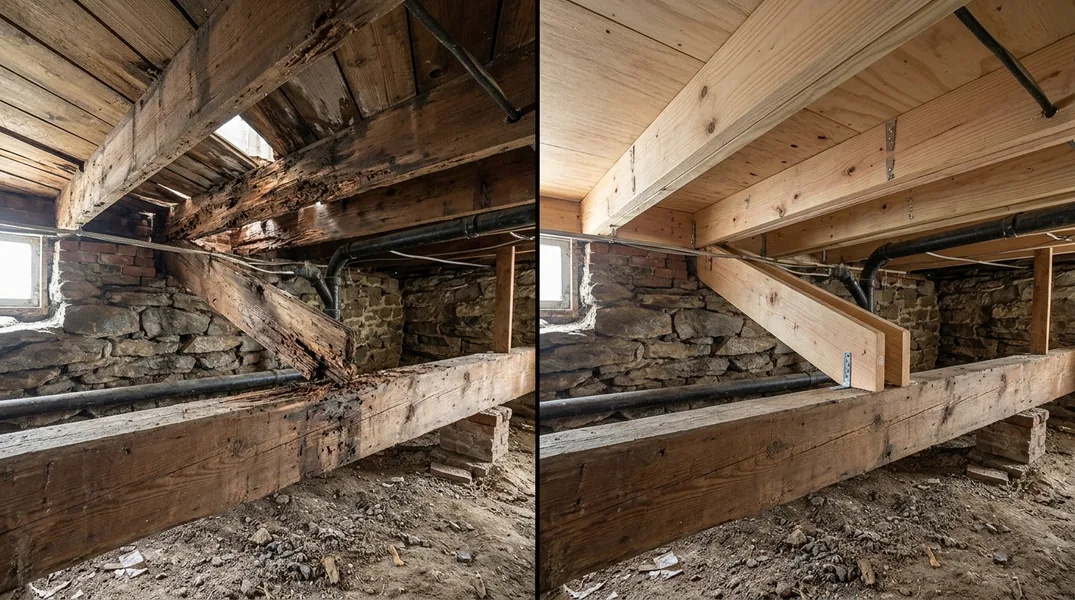
If you own an older home or three-decker in Springfield, a sagging floor is more than just an annoyance. It's a warning sign that something structural is failing beneath your feet. The most common culprit in homes built before the 1980s is Wood Rot and Dry Rot Repair in the floor joists, the horizontal beams that support your floors and distribute weight throughout the house.
Wood rot develops when moisture penetrates the wood and fungi begin to break down the cellulose. In Springfield's humid climate and older construction methods, this is a persistent problem. Basements and crawlspaces with poor drainage, plumbing leaks, roof leaks, and inadequate ventilation create the perfect environment for rot to thrive. Over time, rotted joists lose their structural integrity and can no longer support the weight of the floor above, causing that telltale sag or bounce when you walk across the room.
Beyond rot, sagging can also result from undersized joists that were acceptable when homes were built but no longer meet modern load demands. Settling of the foundation, damage from past water intrusion, and deterioration from Termite Damage Repair situations are other contributing factors. The good news is that once you understand the cause, you can plan an effective repair strategy.
Assessing the Problem: When Should You Worry About Floor Sag?
Not every slightly uneven floor requires immediate structural repair. Older homes naturally settle, and minor variations in floor level are common. However, there are clear warning signs that indicate a serious problem requiring professional attention. If you notice a noticeable dip or slope in the floor, especially one that's getting worse over time, this suggests active structural failure. Similarly, if the sag is accompanied by cracks in walls or ceilings, doors that no longer close properly, or visible water damage or soft spots in the wood, you're likely dealing with significant deterioration.
The bounce or springiness you feel when walking across certain areas is another red flag. This sensation indicates that the joists have lost rigidity and are flexing under weight. In three-deckers, which are common throughout Springfield, sagging on upper floors is particularly concerning because the load-bearing demands are greater. If you're experiencing any of these symptoms, it's time to call in a professional for a thorough inspection. Springfield Carpentry can evaluate your situation and determine whether you need Floor Joist and Subfloor Repair or more extensive structural work.
Floor Joist Repair and Sistering: What's Involved?
When floor joists are damaged but not completely compromised, sistering is often the most cost-effective repair solution. Sistering involves installing new lumber alongside the damaged joist and fastening them together to share the load. This technique restores the structural capacity of the floor without requiring complete joist replacement. The process begins with removing any flooring, insulation, or obstacles above the damaged joist. Once accessible, the carpenter carefully assesses the extent of damage and determines the appropriate sister joist size and length.
The sister joist is then cut to length, positioned tightly against the damaged joist, and secured with lag bolts or through-bolts spaced every 12 to 16 inches along the length. This creates a composite beam that's stronger than the original. In some cases, especially where rot is severe or the joist is severely undersized, the entire joist may need replacement rather than sistering. This is where professional judgment matters. A skilled carpenter will know which approach makes sense for your specific situation and budget.
The beauty of sistering is that it can often be done without removing the flooring above, which keeps costs down and minimizes disruption to your home. However, access is still required from below, typically through a basement or crawlspace. If your home doesn't have easy access, or if the damage is extensive, a complete joist replacement may be necessary. Either way, the goal is to restore the floor to level and eliminate that sag and bounce that's been bothering you.
Sagging Floor Repair Cost in Springfield: What to Budget
The pricing for sagging floor repair varies significantly depending on the extent of damage, the number of joists affected, and the repair method chosen. A simple sistering job on one or two joists might cost between $1,500 and $3,500, while more extensive repairs involving multiple joists or complete replacements can easily exceed $5,000 to $10,000 or more. The key variables are the linear footage of joists needing repair, whether rot or other damage requires treatment, and whether the subfloor also needs replacement.
In three-deckers and larger homes, costs can climb higher because the structural demands are greater and access may be more complicated. Additionally, if the underlying cause is moisture or drainage problems, addressing those issues is essential to prevent future damage. This might involve improving crawlspace ventilation, installing a sump pump, or repairing roof leaks, which adds to the overall project cost. It's tempting to focus only on the joist repair itself, but ignoring the root cause means the problem will likely return within a few years.
The best way to understand your specific costs is to schedule a free estimate with Springfield Carpentry. We'll inspect your floor, identify all affected areas, and provide a detailed quote that explains what's needed and why. You can also call us at (413) 288-3982 to discuss your situation over the phone. Investing in proper repair now is far less expensive than dealing with a collapsed floor or foundation damage later.
When You Need Beam Replacement and Structural Support
In some cases, sagging floors indicate problems that go beyond individual joist repair. If the main support beam beneath your floor has sagged, cracked, or rotted, sistering joists alone won't solve the problem. The beam is the primary structural element that carries the weight of the entire floor system, and if it's compromised, the whole structure is at risk. This is when Beam Replacement and Load-Bearing Wall Removal services become necessary.
Beam replacement is a more complex undertaking than joist repair because it requires temporary support structures to hold up the floor while the old beam is removed and a new one installed. This work must be done carefully and often requires structural engineering calculations to ensure the new beam is properly sized and supported. In three-deckers, where multiple floors rest on a single beam, this work is especially critical and should never be attempted by anyone without professional structural carpentry experience.
If your inspection reveals beam problems, don't delay. Continuing to live with a sagging floor supported by a failing beam puts your family at risk. Contact Springfield Carpentry to discuss your options and get a professional assessment of what's truly needed to make your home safe and structurally sound.
Preventing Future Floor Sag: Maintenance and Moisture Control
Once your sagging floor has been repaired, the best investment you can make is preventing the problem from happening again. The majority of floor damage in older homes stems from moisture intrusion. This means managing water is your first line of defense. Ensure your gutters and downspouts direct water away from your foundation. Check for and repair roof leaks promptly. In basements and crawlspaces, maintain proper grading so water slopes away from the house, and consider installing a sump pump if water accumulation is an issue.
Ventilation is equally important. Crawlspaces should have adequate venting to prevent moisture buildup. If you've had water problems in the past, running a dehumidifier in the basement or crawlspace during humid months can help keep wood dry. Inspect your home regularly for signs of new water damage, soft spots in wood, or musty odors. Catching problems early, before they become structural issues, saves money and headaches down the road. If you're not sure whether your home's drainage and ventilation are adequate, Springfield Carpentry can evaluate those systems as part of a comprehensive inspection.
Looking for a professional carpentry contractor in Springfield? Springfield Carpentry responds fast for all your carpentry needs.
Get a Free QuoteOur services: Wood Rot & Dry Rot Repair · Termite Damage Repair · Floor Joist & Subfloor Repair