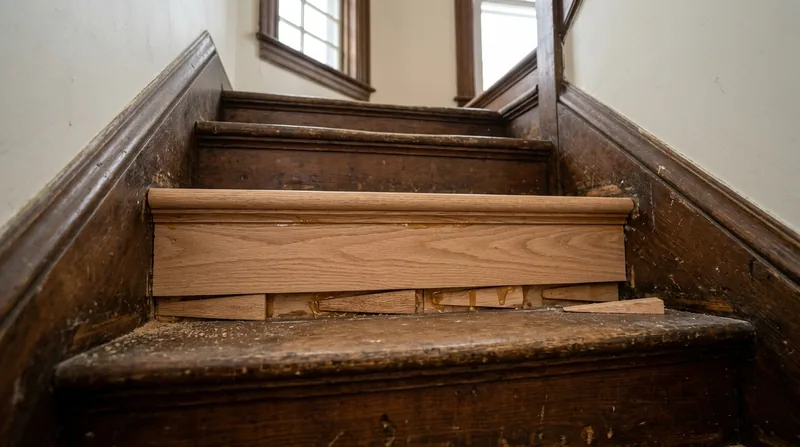




Springfield's architectural heritage rests on stairs and railings that have carried residents up and down for over a century. The steep back staircases of three-deckers in Six Corners and the South End, the grand front stairs of Queen Anne Victorians in McKnight, and the open porches stacked above one another all depend on wood framing and railings that weather New England's freeze-thaw cycles, heavy snow loads, and persistent damp. Stair and railing repair in Springfield is not cosmetic work. Squeaky treads, loose balusters, and soft stringers signal wood movement and decay that will accelerate if left unaddressed. We repair and rebuild the stairs and railings of Springfield's historic homes, restore period details, and install solid handrails and safety upgrades that work with the character of the house.
Why Stair and Railing Repair Matters in Springfield's Historic Homes
Springfield's residential stock spans Victorian mansions, three-deckers with stacked open porches, and mid-century colonials, each with stairs and railings designed for a different era and built from wood species and joinery that respond to humidity and temperature swings. The Connecticut River valley climate, with its cold winters, repeated freeze-thaw cycles, and muggy summers, pushes moisture into wood framing year-round. Treads cup and split. Stringers develop soft spots where water pools at the base. Newel posts loosen as the wood around them moves. Balusters work free in their mortises. A loose railing is a safety hazard. A deteriorating stringer is a structural problem that spreads to the rim joist and floor framing it sits on. Early repair prevents the job from ballooning into floor joist replacement or structural reinforcement.
- We tighten and re-wedge loose balusters and newel posts without removing them whenever the wood is solid.
- We sister new stringers to existing ones when the old wood is soft, or replace stringers entirely when rot has consumed the bearing edges.
- We restore period railings on Victorians and Colonials, matching profile, wood species, and joinery to the original.
- We install modern handrails and code-compliant railings that integrate with the existing architecture.
- We repair and replace treads and risers, fixing squeaks by reinforcing the connections between treads and stringers.
Addressing stair and railing problems early keeps small repairs from becoming major structural work.
Local example: A three-decker in Holyoke with open porches had loose balusters on the middle-floor landing. We tightened and re-wedged each baluster, reinforced the newel posts, and sealed the top of the newel to stop water entry. The work cost less than replacing the entire railing, and the balusters remain original.
For more information on how moisture and wood movement affect home structure, see our guide to wood rot and dry rot repair in Springfield.
How We Repair Stairs and Railings: Our Process in Springfield
Every stair and railing repair begins with a close look at the wood, the joints, and the failure. We distinguish between cosmetic squeaks and structural softness, between a loose joint that can be re-wedged and a stringer that needs sistering or replacement. We walk the stairs, flex the railings, and probe soft spots with a knife to determine the extent of decay. We then explain what we find and propose repair or replacement based on what the wood can support and what the homeowner needs.
- We inspect the entire stair assembly, testing each tread and riser for movement and checking the stringer for soft wood or rot.
- We identify the source of squeaks by locating the joints that are moving, typically where the tread meets the stringer or riser.
- We tighten loose connections by re-wedging, adding fasteners, or reinforcing the joint from underneath, depending on access and the construction method.
- We assess the railing for loose balusters, damaged newel posts, and failed joinery, then repair or replace components as needed.
- We test the repair by walking and flexing to confirm the squeak is gone and the railing is solid before we finish.
The goal is a quiet, safe stair that looks and feels right in the home.
Springfield example: A Victorian on Forest Park had a grand front staircase with a squeaky second-floor landing. We found that the tread was moving on the stringer where the fasteners had corroded and failed. We reinforced the joint with new fasteners from underneath, sealed the gap, and the squeak disappeared. The staircase is now solid and quiet, and the original wood is preserved.
Related work on structural framing and reinforcement is detailed in our framing and structural carpentry service page.
Stair and Railing Repair Methods: Repair vs. Replace
| Approach | Description | Best for |
|---|---|---|
| Re-wedging and tightening | We remove balusters or treads, clean out old wedges and fasteners, and reinstall with new wedges and hardware, sealing the joint to stop water entry. | Loose balusters, squeaky treads, minor movement in solid wood. |
| Sistering and reinforcement | We attach a new stringer or support beam alongside the existing one using fasteners and adhesive, distributing load and restoring stiffness without removing the original. | Soft spots in stringers, partial rot, sagging stairs that need additional support. |
| Tread and riser replacement | We remove and replace individual treads, risers, or nosing in matching wood species and profile, maintaining the original stringer and newel posts. | Split or cupped treads, damaged nosing, worn finish on visible steps. |
| Stringer replacement | We remove and rebuild the stringer in matching wood and profile when rot has consumed the bearing edges or the wood cannot support load safely. | Extensive rot, structural failure, stairs that are no longer safe to use. |
| Period railing restoration | We repair or rebuild railings, balusters, and newel posts in the original profile and wood species, respecting the architectural character of the home. | Victorians, Colonials, and period homes where original details must be preserved. |
| Modern handrail installation | We install solid handrails, safety railings, and code-compliant balusters that integrate with existing stairs and meet current building code for graspability and load. | Attic stairs, basement stairs, porches, and updates needed for safety or accessibility. |
Stair and Railing Repair Cost in Springfield: What to Expect
The cost of stair and railing repair depends on the scope of the problem and the method needed to fix it. A simple tightening of loose balusters and wedging of a squeaky tread may start at $600 to $900. Sistering a stringer or replacing a section of treads typically runs $1,200 to $2,500. Full stringer replacement or extensive railing restoration can cost $2,500 to $5,000 or more, depending on the length of the staircase, the wood species, and the complexity of the original joinery. The size and condition of the staircase, the accessibility of the work, the species of wood, and whether the original details must be matched all affect the final price. We recommend getting two or three estimates so you can compare approaches and pricing. For detailed pricing guidance on all our services, visit our pricing overview.
Stair and Railing Repair Near Me: What Springfield Homeowners Should Know When Hiring
Choosing a carpenter for stair and railing work requires more than a quick phone quote. The work is visible, it affects safety, and it must respect the character of an older home. Look for a contractor who will come to your home, inspect the stairs and railings, explain what they find, and propose repair before replacement. Ask to see examples of similar work, particularly on period homes if your house is Victorian or Colonial. Confirm that the contractor is fully insured and can provide a certificate of insurance on request. Get multiple estimates so you can compare the proposed method, the timeline, and the price. If your home is in a historic district or protected neighborhood, check with your local building department or historic commission to understand whether permits or design review are required before work begins. Some railings and staircase modifications may need a permit depending on what is being changed. Call Springfield's building department at the municipal offices to verify requirements for your address and scope.
When you are ready to move forward, contact us for a free estimate. We will schedule a time to visit your home, inspect the stairs and railings, and provide a detailed proposal and price. There is no obligation, and we respond within 24 hours at (413) 288-3982.
Stair & Railing Repair in Springfield: Pricing Guide
| Service | Price | Details |
|---|---|---|
| Loose balusters and squeaky treads | Starting at $600 | Re-wedging, tightening, and minor joint reinforcement on solid wood, no replacement of parts |
| Tread and riser replacement | Starting at $1,200 | Removal and installation of one to three treads, matching wood species and profile, including labor and materials |
| Stringer sistering and reinforcement | Starting at $1,500 | Attaching a new stringer alongside existing one to repair soft spots and restore stiffness, labor and materials included |
| Full stringer replacement or railing restoration | Starting at $2,500 | Complete removal and rebuilding of stringers or period railings, matching original wood species, profile, and joinery |
| Travel and estimate | Free | No charge for travel within Springfield and surrounding service areas, free on-site estimate with response within 24 hours |
Indicative pricing, the exact cost depends on square footage, finish, and site access. Free personalized estimate within 24h at (413) 288-3982.


