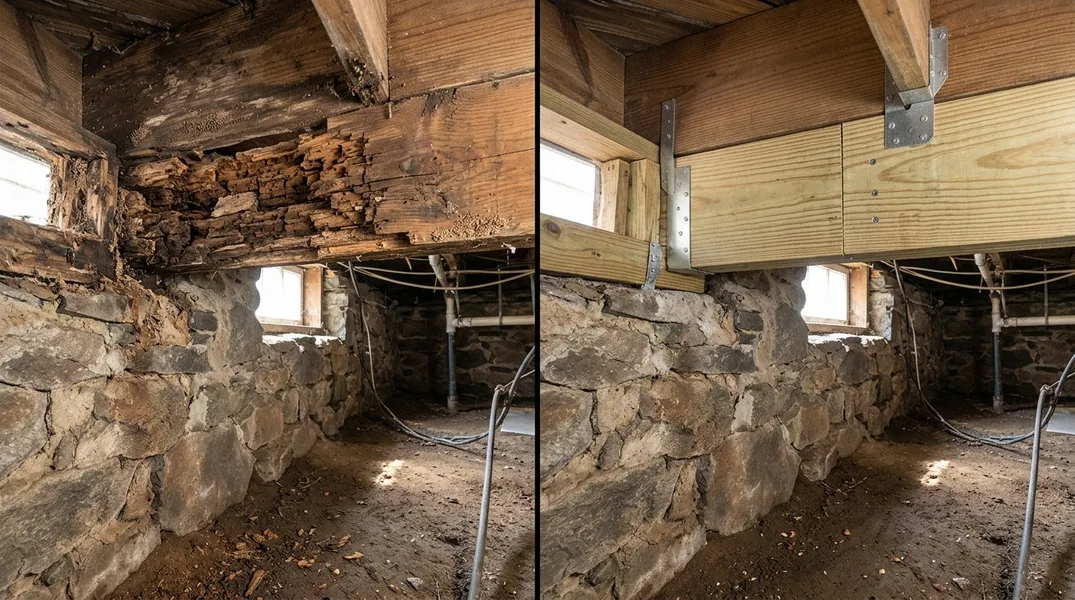
Understanding Wood Rot vs. Insect Damage in Springfield Homes
Wood rot and insect damage are two of the most common structural threats facing homeowners in Springfield and the surrounding Western Massachusetts region. While they may look similar at first glance, they require different assessment and repair approaches. Understanding the difference is the first step toward making an informed decision about whether your damaged wood can be salvaged or needs replacement.
Wood rot occurs when moisture penetrates wood and fungi begin to break down the cellulose structure. This process weakens the wood from the inside out, often creating a spongy texture or visible discoloration. Insect damage, by contrast, is caused by termites, carpenter ants, or wood-boring beetles that tunnel through the wood as they feed or nest. The damage pattern differs significantly: rot spreads in soft, amorphous zones, while insect damage typically leaves behind small holes, galleries, or a honeycomb-like interior structure. Identifying which problem you're facing is crucial because the repair strategy and cost implications vary considerably.
Can You Repair Rotted Wood Without Replacing It?
The short answer is yes, but with important caveats. Whether you can repair rotted wood without replacing it depends on the extent of the damage, the location of the rot, and the wood's structural role in your home. Superficial rot that affects only the outer layers of non-structural wood, such as trim, fascia, or decorative elements, is often a good candidate for repair using epoxy fillers or wood hardeners. These products penetrate the damaged area, stabilize the remaining wood, and can be sanded and painted to blend seamlessly with the surrounding surface.
However, structural wood that bears weight, such as beams, joists, or load-bearing posts, presents a different scenario. Even if the rot appears limited, hidden damage beneath the surface is common, and the compromised structural integrity may not be visible to the naked eye. In these cases, a professional inspection is essential before deciding on repair versus replacement. Wood Rot & Dry Rot Repair specialists use moisture meters and probing tools to assess the true extent of damage and determine whether the wood can safely support your home's weight after repair. When rot has penetrated more than one-quarter of the wood's thickness or compromises a significant structural area, replacement is typically the safer and more cost-effective long-term solution.
Assessing Termite Damaged Wood: Repair or Replace?
Termite Damage Repair decisions follow a similar logic to wood rot assessment, but with one critical difference: termites can return if the infestation is not fully eliminated. Before any repair or replacement work begins, you must address the pest problem itself. Termites create galleries and tunnels within the wood, weakening it from the inside. Unlike rot, which is typically localized, termite damage can be extensive and hidden, making professional evaluation non-negotiable.
If termite damage is caught early and affects only a small, non-structural area, epoxy injection or wood stabilization may be viable. However, most termite damage in homes across Chicopee and Holyoke involves structural components like sill plates, floor joists, or wall framing. In these cases, replacement is almost always necessary. The honeycomb pattern of termite galleries significantly compromises the wood's load-bearing capacity, and attempting to repair rather than replace can create serious safety hazards. A professional pest control inspection combined with a structural assessment from Springfield Carpentry will provide clarity on your best path forward.
When Should You Replace Rotted Wood Siding?
Siding is one of the most visible and weather-exposed components of your home, making it particularly vulnerable to rot. When deciding whether to replace rotted wood siding, consider both the extent of damage and the age of the siding material. If only a few boards show minor surface rot and your siding is relatively new, targeted repairs using epoxy or wood filler may suffice. However, if rot is widespread across multiple boards, or if the damage has penetrated the sheathing beneath the siding, replacement is the better investment.
Beyond structural considerations, the aesthetic factor matters too. Repaired siding, even when done professionally, may not match the surrounding boards perfectly if the siding is older or has weathered unevenly. Homeowners often find that replacing an entire wall section or the full siding provides a more cohesive appearance and ensures consistent protection. Additionally, siding replacement offers an opportunity to upgrade to more rot-resistant materials, improve insulation, or enhance your home's curb appeal. The decision ultimately depends on the scope of damage, the condition of the underlying structure, and your long-term goals for the home.
Wood Rot & Dry Rot Repair Cost in Springfield: What to Budget
Understanding pricing for wood rot repair is essential for homeowners planning their repairs. The cost varies dramatically based on several factors: the location and extent of damage, whether repair or replacement is needed, the type of wood involved, and the structural complexity. Minor repairs to trim or fascia might cost a few hundred dollars, while replacing rotted Floor Joist & Subfloor Repair work can easily exceed several thousand dollars. Structural repairs involving beams or load-bearing elements are among the most expensive because they often require temporary support systems, permits, and specialized expertise.
In Springfield, most homeowners should budget for a professional inspection before committing to a repair plan. This typically costs between $150 and $300 but provides invaluable information about hidden damage and the true scope of work needed. When you're ready to move forward, Springfield Carpentry can provide a detailed estimate based on a thorough site assessment. The investment in professional repair or replacement now prevents far more costly structural damage later. Delaying treatment allows rot or insect damage to spread, potentially affecting multiple structural systems and dramatically increasing repair costs. Contact Springfield Carpentry at (413) 288-3982 to schedule your free estimate and get a clear picture of your repair costs.
Structural Components: When Professional Help is Non-Negotiable
Certain wood components in your home are so critical to structural integrity that professional assessment is absolutely essential. These include rim joists, band boards, main support beams, and load-bearing posts. If rot or insect damage affects any of these elements, the safety of your home and everyone in it is at stake. Even if you're handy, attempting DIY repairs on structural wood is extremely risky and often violates local building codes. Beam Replacement & Load-Bearing Wall Removal work requires professional expertise, proper permits, and temporary support systems to prevent catastrophic failure during repairs.
Springfield Carpentry specializes in identifying hidden structural damage and executing repairs that meet or exceed building code requirements. Our team uses advanced diagnostic tools and decades of experience to determine whether damaged structural wood can be reinforced, sistered (supported with additional framing), or must be fully replaced. We also handle the permitting process and coordinate with inspectors to ensure your home passes all required safety checks. If you suspect rot or insect damage in your home's structural framing, don't wait. Contact us at (413) 288-3982 for a professional evaluation that could prevent serious safety issues and protect your investment.
Looking for a professional carpentry contractor in Springfield? Springfield Carpentry responds fast for all your carpentry needs.
Get a Free QuoteOur services: Wood Rot & Dry Rot Repair · Termite Damage Repair · Floor Joist & Subfloor Repair