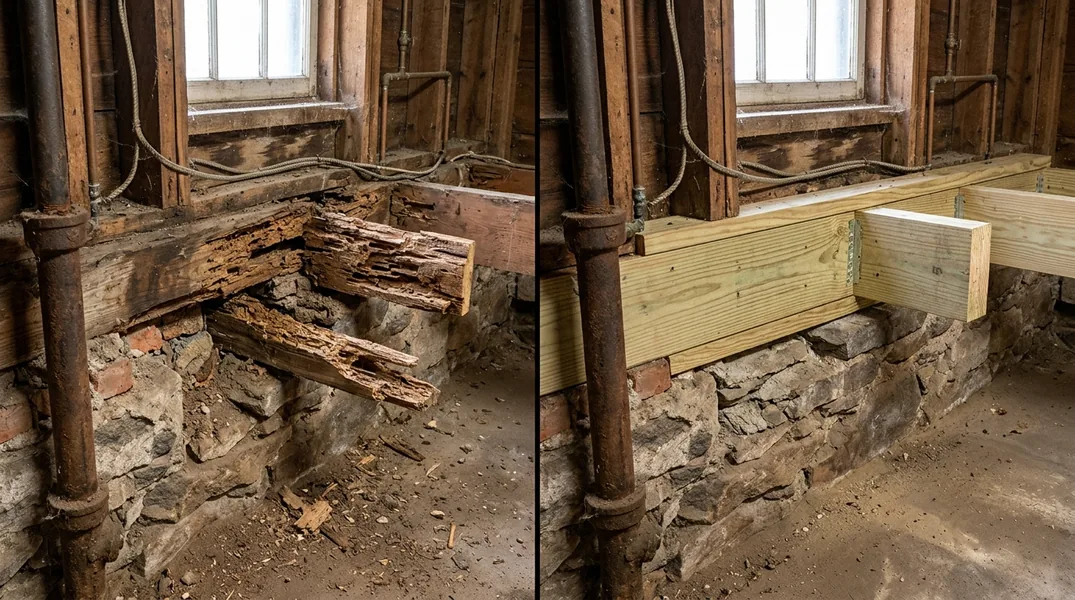
The Hard Truth: Most Wood Rot and Termite Damage Isn't Covered
If you've discovered wood rot or termite damage in your Springfield home, your first instinct might be to call your insurance company. Unfortunately, the answer you'll likely receive is disappointing. Most standard homeowners insurance policies in Massachusetts do not cover wood rot or termite damage, and understanding why is crucial for protecting your property and your wallet.
Insurance companies view these types of damage differently than sudden, accidental events like fires or storms. Wood rot and termite infestations are considered gradual deterioration or preventable maintenance issues. Because these problems develop over time and are often linked to poor maintenance or lack of pest prevention, insurers classify them as homeowner responsibility rather than insurable events. This distinction has major financial implications for homeowners across Chicopee, West Springfield, Holyoke, and the surrounding region.
Understanding Homeowners Insurance Exclusions in Massachusetts
Massachusetts homeowners insurance policies typically exclude coverage for wood rot, dry rot, and termite damage under what's called the 'maintenance clause' or 'wear and tear exclusion.' This language exists in nearly every standard homeowners policy because insurers argue that homeowners should maintain their properties to prevent such damage. When you review your policy documents, you'll likely find explicit language stating that damage resulting from insects, rodents, or gradual moisture damage is not covered.
However, there are rare exceptions worth understanding. If termite damage or wood rot results from a covered peril, you may have a claim. For example, if a covered storm causes a roof leak that subsequently leads to wood rot, the damage might be covered under that storm claim. Similarly, if a burst pipe (a covered event) causes water damage that eventually leads to rot, the initial water damage claim might apply. The key is proving that an insurable event directly caused the damage, not that poor maintenance or pest activity created the problem. This distinction is why it's essential to document the actual cause of damage when you first notice it.
Ice Dam Insurance Claims: A Different Scenario in Massachusetts Winters
Massachusetts winters create a unique insurance situation that homeowners should understand. Ice dams, which form when snow melts and refreezes at the roof's edge, can cause water to back up under your shingles and seep into your home. If an ice dam causes water damage to your interior, that damage may be covered under your homeowners policy because the ice dam itself is considered an accidental event, not gradual deterioration.
However, the coverage stops at the water damage itself. If that water damage eventually leads to wood rot in your framing, joists, or subfloor, the wood rot damage typically falls back under the exclusion. Insurance will cover the immediate water damage remediation, but any structural repairs related to rotted wood would be your responsibility. This is an important distinction for homeowners in Massachusetts, where winter weather regularly causes ice dam issues. If you suspect ice dam damage has caused wood rot, documenting the timeline and the original water event can be helpful if you decide to file a claim or seek Wood Rot & Dry Rot Repair services.
When Termite Damage Insurance Claims Might Apply
The question 'is termite damage covered by homeowners insurance' has a frustratingly consistent answer: almost never. Standard homeowners policies exclude insect damage, including termites, carpenter ants, and wood-boring beetles. Insurance companies argue that termite infestations are preventable through regular inspections and pest control treatments, making them a maintenance issue rather than an insurable loss.
That said, some specialty or premium homeowners insurance policies may offer optional termite coverage as an add-on rider, though this is uncommon and comes at an additional cost. If you're concerned about Termite Damage Repair costs, it's worth calling your insurance agent to ask whether your policy includes any pest damage coverage or whether it's available as an option. In most cases, however, homeowners in Springfield and surrounding areas will need to cover termite damage repairs out of pocket. This makes prevention through regular inspections and prompt pest control treatment far more cost-effective than hoping insurance will cover the damage.
Wood Rot & Dry Rot Repair Cost in Springfield: What to Budget
Since insurance rarely covers wood rot or termite damage, homeowners need to understand what repairs actually cost. The price of Wood Rot & Dry Rot Repair varies dramatically depending on the extent of the damage, the location of the rot, and the structural components affected. Minor surface rot on trim or siding might cost $500 to $2,000 to repair, while extensive rot affecting floor joists, beams, or load-bearing walls can easily exceed $10,000 to $30,000 or more.
The most expensive repairs typically involve Floor Joist & Subfloor Repair or Beam Replacement & Load-Bearing Wall Removal, which require structural engineering and careful restoration. Rather than guessing at costs, the best approach is to get a professional assessment. Springfield Carpentry offers a free estimate so you can understand exactly what you're facing before making repair decisions. Early detection of rot is your best financial defense, as catching the problem before it spreads to structural elements keeps repair costs manageable.
What You Should Do If You Discover Wood Rot or Termite Damage
The moment you notice signs of wood rot, termite damage, or pest activity in your home, take these steps to protect yourself financially and structurally. First, document the damage with photos and notes about when you discovered it. This documentation helps if you later find that the damage is connected to a covered event, and it also establishes a timeline that may matter for insurance purposes.
Second, contact a qualified local carpenter or structural inspector to assess the damage and determine its cause and extent. Springfield Carpentry can provide a professional evaluation and explain your repair options and pricing upfront. Third, file a claim with your insurance company if there's any possibility the damage resulted from a covered peril, even if you expect denial. Having a denial on record protects you if you later need to prove you attempted to use insurance. Finally, get repair work done promptly once you understand the scope of the problem. Delaying repairs allows rot to spread and structural damage to worsen, which only increases your ultimate costs.
If you're a homeowner in Springfield dealing with suspected wood rot or termite damage, don't wait. Call Springfield Carpentry at (413) 288-3982 to schedule your free estimate and learn exactly what you're dealing with.
Looking for a professional carpentry contractor in Springfield? Springfield Carpentry responds fast for all your carpentry needs.
Get a Free QuoteOur services: Wood Rot & Dry Rot Repair · Termite Damage Repair · Floor Joist & Subfloor Repair