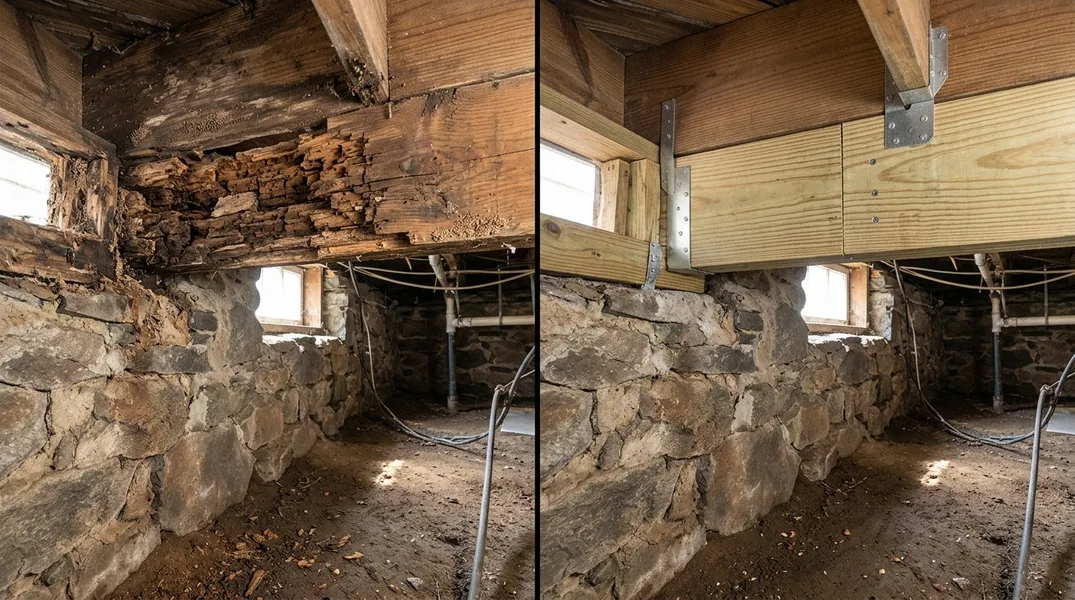
Understanding the Three Main Wood Destroyers
If you own a home in Springfield, you've likely worried about what might be silently damaging your house's wooden structure. Three culprits are most common: dry rot, carpenter ants, and termites. While they all compromise wood integrity, they work in completely different ways, and identifying which one you're dealing with is the first step toward protecting your investment.
Dry rot is a fungal decay that spreads through wood when moisture levels remain consistently high. Carpenter ants, despite their name, don't actually eat wood like termites do. Instead, they tunnel through it to create nests, leaving behind sawdust-like debris. Termites, on the other hand, genuinely consume wood as their primary food source. Understanding these distinctions helps you take the right action before the damage becomes severe enough to require Wood Rot & Dry Rot Repair or Termite Damage Repair.
What Does Wood Rot Look Like? Identifying Dry Rot Damage
Dry rot is perhaps the most deceptive of the three because it can spread extensively before you notice obvious signs. When you're examining what wood rot looks like, look for wood that appears darker than surrounding areas, feels soft or spongy when you press on it, and may show visible cracks running across the grain in a cube-like pattern. This distinctive cracking pattern is one of the most reliable visual indicators of dry rot specifically.
The affected wood may also feel lighter than normal because the fungus has consumed the interior fibers while the surface remains relatively intact. You might notice a musty smell in areas where dry rot is active, particularly in basements, crawl spaces, or around windows and doors where moisture tends to accumulate. In Springfield, where humidity levels fluctuate seasonally, dry rot commonly appears in poorly ventilated areas or where water damage from roof leaks or plumbing issues has gone unaddressed. If you suspect dry rot, it's crucial to act quickly because the fungal spores can spread to new areas of wood through airborne spores and contact.
Carpenter Ant Damage: What to Look For
Carpenter ants create a distinctly different type of damage compared to dry rot or termites. These large black or reddish ants excavate galleries through wood to build their nests, but they don't actually consume the wood as food. Instead, you'll notice clean, smooth tunnels inside the wood, often surrounded by coarse sawdust that the ants push out as they work. This sawdust, called frass, is one of the most obvious signs of carpenter ant activity and is much larger and grainier than the fine powder left by termites.
You may also observe the ants themselves, particularly during spring and early summer when they're most active. Carpenter ants prefer softened or partially decayed wood, so they often target areas that already have moisture problems or existing fungal damage. Unlike termites, carpenter ants don't create mud tubes, and they're active primarily at night. If you hear faint rustling or crackling sounds coming from inside walls or wooden structures, especially in the evening, carpenter ants may be the culprit. Catching carpenter ant infestations early is important because while they don't consume wood as rapidly as termites, their tunneling can eventually compromise structural integrity.
Signs of Termite Damage in Wood: The Structural Threat
Termites represent perhaps the most serious threat to your home's wooden structure because they actively consume wood fiber as their primary food source. Unlike carpenter ants, termites work both day and night, and a single colony can cause catastrophic damage in just a few years if left untreated. The signs of termite damage in wood are distinctive: you'll notice hollow-sounding wood, very fine sawdust (much finer than carpenter ant frass), and often mud tubes running along foundation walls or wooden supports.
Termites create these mud tubes as protective highways between their underground colonies and food sources above ground. The tubes help them maintain the moisture and darkness they need to survive. When you tap on wood damaged by termites, it often sounds hollow because the insects eat the interior while leaving a thin shell of exterior wood intact. This makes termite damage particularly insidious because the structural compromise may not be visible from the outside. In homes throughout West Springfield and surrounding areas, termite damage often first appears in basements, crawl spaces, and around the foundation perimeter where soil contact provides easy access. If you suspect termite activity, professional inspection and Termite Damage Repair should be your immediate priority.
Key Differences at a Glance: How to Tell Them Apart
The most reliable way to distinguish between these three wood destroyers is to examine the damage pattern and any debris left behind. Dry rot creates that distinctive cube-like cracking pattern and produces no debris, only soft, darkened wood. Carpenter ants leave behind coarse, visible sawdust piles and create smooth, clean tunnels. Termites produce fine, powdery frass that resembles talcum powder and often leave mud tubes connecting their colony to the wood source.
Another key difference lies in the wood itself. Dry rot-affected wood becomes progressively softer and more crumbly as the fungus advances. Carpenter ant-damaged wood retains its hardness but feels hollow inside. Termite-damaged wood feels hard on the exterior but is completely hollowed out within. Moisture is also a telltale factor: dry rot requires sustained high moisture to spread, carpenter ants are attracted to moist wood but don't require it for survival, and termites need moisture to stay alive but maintain it themselves through their mud tubes. Understanding these differences helps you communicate accurately with a professional if you need to call one.
When to Call a Professional for Wood Damage Repair Near Me
While minor surface damage might seem manageable, wood damage affecting structural components like floor joists, beams, or load-bearing walls demands professional assessment and repair. If you've identified any of these three threats in your Springfield home, the safest approach is to have a qualified carpenter inspect the extent of the damage before attempting any repairs yourself.
Springfield Carpentry specializes in identifying and repairing all three types of wood damage. Our team can assess whether you need Wood Rot & Dry Rot Repair, structural work like Floor Joist & Subfloor Repair, or more extensive solutions such as Beam Replacement & Load-Bearing Wall Removal. The longer you wait to address wood damage, the more expensive the repair becomes and the greater the risk to your home's safety. We recommend scheduling a free estimate if you've noticed any suspicious signs. You can reach us at (413) 288-3982 to discuss your concerns and get a professional evaluation of what you're dealing with.
Looking for a professional carpentry contractor in Springfield? Springfield Carpentry responds fast for all your carpentry needs.
Get a Free QuoteOur services: Wood Rot & Dry Rot Repair · Termite Damage Repair · Floor Joist & Subfloor Repair